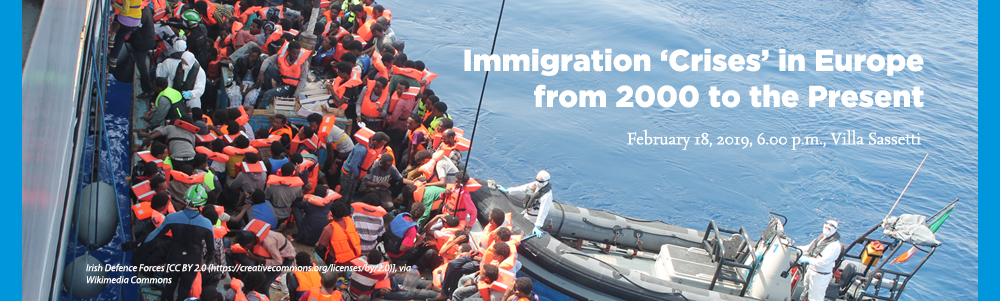
Over the last two decades three different yet overlapping ‘crises’ have underpinned the development of migration flows and immigrant settlement in Europe: an integration crisis since the early 2000s, the economic crisis since 2007 and, last but not least, the current ‘refugee crisis’. These crises reflect Europe’s difficulty in coming to terms with being a de facto continent of immigration. Political responses have been slow and often inadequate, contributing to the polarization of European public opinion without tackling the key structural causes of ‘the crises’. To deal with these challenges Europe needs to invest more in research and policy interventions at both the EU and local levels as the central loci of political action on migration. While the EU is the most relevant actor for promoting and sustaining a shift in political discourses and intercultural integration policies and practices that can serve as the keystone for building a Europe of immigration, the local level is the very context in which interactions between different social actors take place on a daily basis.